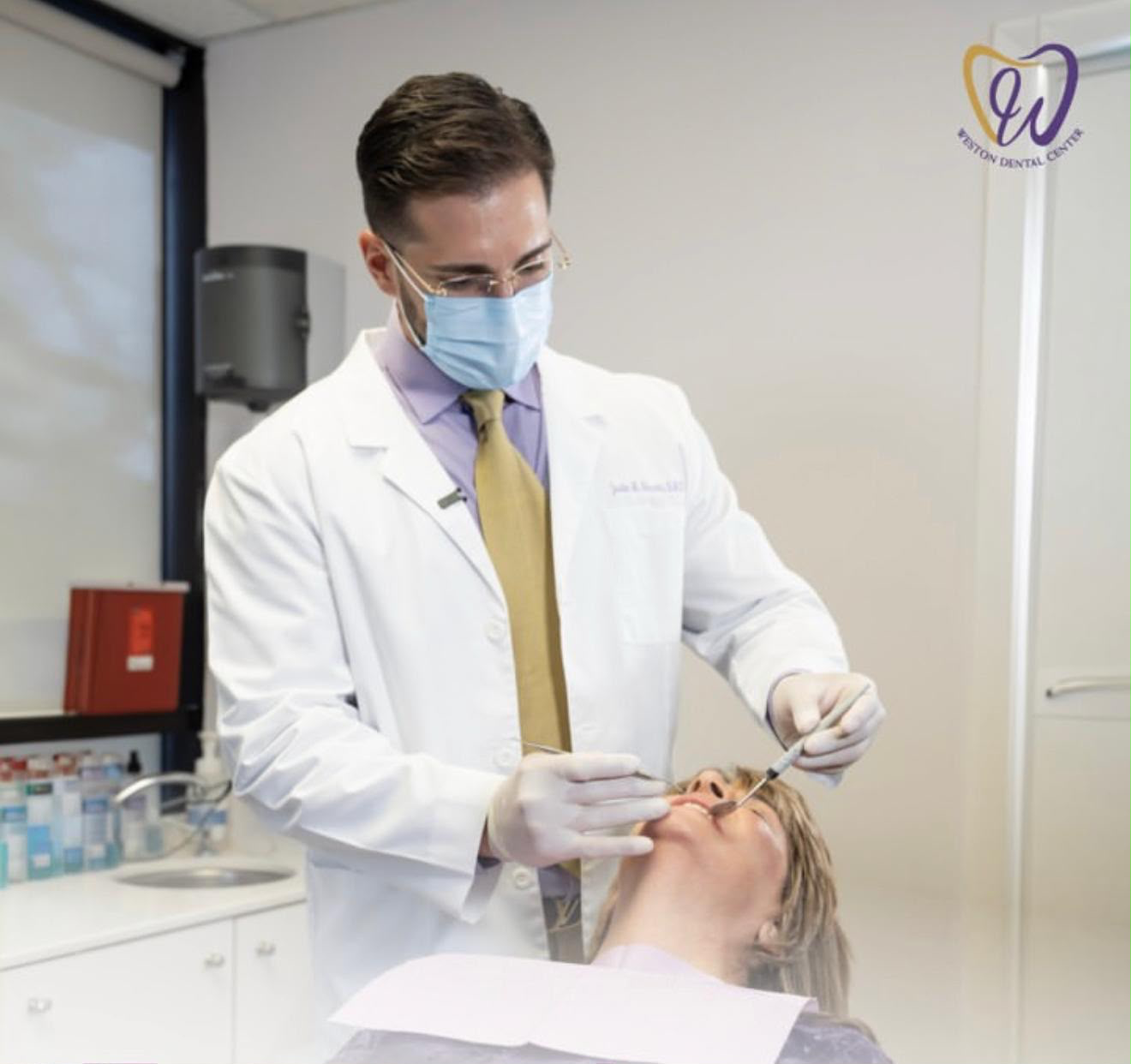

An oral cancer screening is a quick visual and hands-on examination of the lips, mouth, tongue, jaw, and neck. It is usually painless and can often be completed during a routine dental exam. The purpose is to identify tissue changes that may need monitoring or further evaluation—not to provide a cancer diagnosis during the screening itself.
At Weston Dental Center, the screening is integrated into preventive care so the dental team can compare changes over time and explain any findings clearly.
What Does the Dentist Look For?
The dentist examines areas that are easy to overlook at home, including the inside of the cheeks, the sides and underside of the tongue, the floor and roof of the mouth, the gums, and the back of the throat when visible. The examination may look for:
- A sore or irritated area that has not healed.
- Red, white, or mixed-color patches.
- Unexplained thickening, swelling, or changes in texture.
- A lump or area that feels firm.
- Persistent asymmetry or a change from a previous visit.
The dentist may gently move or hold the tongue with gauze to see its sides and underside. They may also feel beneath the jaw and along the neck for enlarged or unusual areas. According to the National Institute of Dental and Craniofacial Research, this type of exam is quick and painless.
What Questions May Be Asked?
Your current health history helps place the physical findings in context. The team may ask about tobacco or nicotine use, alcohol consumption, previous oral lesions, sun exposure to the lips, family or personal cancer history, and symptoms such as persistent hoarseness or difficulty swallowing.
Human papillomavirus can also be associated with cancers of the oropharynx. Risk factors do not mean that a person has cancer, and people without known risk factors can still develop abnormal tissue. Honest answers simply help the dentist make an informed recommendation.
Does the Screening Use Special Lights or Dyes?
A conventional clinical examination uses visual inspection and gentle palpation. Some practices may use an adjunctive light, stain, or cytology tool in selected circumstances. The American Dental Association’s updated guidance continues to describe the comprehensive clinical examination as foundational and limits the role of adjunctive tools to specific situations.
No light or rinse can confirm cancer on its own. When an area is genuinely suspicious, a biopsy and microscopic examination are generally needed for diagnosis.
What Happens if the Dentist Finds Something?
Many oral changes are not cancer. Irritation from accidentally biting the cheek, a sharp tooth, a hot-food burn, or another benign condition can produce temporary changes. Depending on the appearance and history, the dentist may:
- Document the location, size, color, and texture.
- Remove a possible source of irritation when appropriate.
- Schedule a short follow-up to confirm that the area heals.
- Refer you to an oral surgeon, oral medicine specialist, or another clinician for further evaluation or biopsy.
A screening result is not a diagnosis. The National Cancer Institute notes that screening can have both false-positive and false-negative results, so follow-up recommendations matter.
When Should You Request an Examination?
Do not wait for your next routine visit if you notice a mouth sore, patch, lump, unexplained numbness, persistent throat sensation, trouble swallowing, or voice change that does not resolve. Any ongoing change deserves professional evaluation, even when it is painless.
Regular dental exams and cleanings provide an opportunity for the dentist to observe areas you may not be able to see and to compare them with previous findings.
Frequently Asked Questions
Is an oral cancer screening painful?
No. A conventional screening generally involves looking at the tissues and gently feeling the mouth, jaw, and neck. It does not normally require needles or incisions.
How long does the screening take?
The focused examination usually takes only a few minutes and is often included as part of a comprehensive or periodic dental exam.
Can a dentist diagnose cancer during the screening?
No. A dentist can identify an area that needs further evaluation, but a definitive diagnosis generally requires appropriate testing, often including a biopsy.
Do only tobacco users need screening?
No. Tobacco is an important risk factor, but abnormal oral tissue can occur in people who have never used tobacco. The dentist considers the complete health history and clinical findings.
How often should I receive an oral cancer examination?
Many adults are examined during routine dental visits. The appropriate frequency depends on age, history, risk factors, symptoms, and previous findings.
Schedule an Oral Health Evaluation in Weston
If you have noticed a persistent change or are due for a routine examination, schedule a visit with Weston Dental Center. We can examine the area, explain what we see, and coordinate appropriate follow-up when necessary.
Sources: National Institute of Dental and Craniofacial Research: The Oral Cancer Exam; American Dental Association: Oral Cancer Living Guideline; National Cancer Institute: Oral Cancer Screening.
Author’s Bio

Dr. Justin Hosseini
Oral cancer screenings are done as part of preventive care at Weston Dental Center with Dr. Justin Hosseini. He conducts thorough evaluations to help identify early changes in oral tissues. Screenings are paired with patient education to support overall oral and general health awareness.