
Why Does My Jaw Click? Common TMJ Symptoms and When to See a Dentist

A clicking or popping sound in your jaw is not automatically a sign that something is wrong. Jaw sounds without pain or limited movement are common and often do not require treatment. However, clicking that becomes painful or occurs with stiffness, locking, headaches, or difficulty chewing may be associated with a temporomandibular disorder (TMD) and should be evaluated.
What Are the TMJ and TMD?
The temporomandibular joints, or TMJs, connect the lower jaw to the skull just in front of each ear. They work with muscles, ligaments, and small cushioning discs to let you speak, chew, yawn, and move your jaw from side to side.
TMJ is the name of the joint. TMD is the broader term for a group of conditions that can affect the joints, chewing muscles, or nearby tissues. Because several different problems can produce similar symptoms, a diagnosis should be based on an examination rather than on jaw sounds alone.
Why Does a Jaw Click or Pop?
A click can occur when the small disc inside the joint shifts as the jaw opens or closes. It may also accompany changes in joint movement, muscle tension, or irritation around the joint. In many people, the sound is painless and remains harmless.
Jaw discomfort can sometimes follow an injury or occur with conditions such as arthritis. Clenching, grinding, extended gum chewing, nail biting, and repeatedly holding the jaw tense may also place additional stress on the muscles and joints. In many cases, however, the exact cause of TMD symptoms is not clear.
The National Institute of Dental and Craniofacial Research notes that clicking or popping without pain is common and generally does not need treatment. The more important questions are whether the sound hurts, whether jaw movement has changed, and whether the symptoms affect daily activities.
Common Symptoms That May Accompany TMD
Jaw clicking is only one possible symptom. A dental evaluation may be appropriate if you also notice:
- Pain or tenderness in the jaw joint or chewing muscles
- Pain that spreads into the face, ear area, temple, or neck
- Stiffness or fatigue when chewing
- Difficulty opening the mouth normally
- A jaw that catches or locks open or closed
- Painful clicking, popping, or grinding sounds
- Recurring headaches associated with jaw tension
- A noticeable change in how the upper and lower teeth fit together
These symptoms do not always mean that the jaw joint is the source. Tooth problems, infections, sinus conditions, injuries, and other medical issues can also cause facial or jaw pain. A dentist can examine the teeth and surrounding structures while deciding whether another healthcare professional should be involved.
When Should You See a Dentist About Jaw Clicking?
Consider scheduling an evaluation when clicking is painful, persists with other symptoms, or begins to interfere with eating, speaking, sleeping, or opening your mouth. You should also seek care if the jaw frequently locks, movement becomes limited, your bite suddenly feels different, or symptoms begin after an injury.
Sudden severe pain, significant swelling, fever, facial trauma, or an inability to open or close the mouth warrants prompt professional attention. These signs may have causes other than TMD and should not be self-diagnosed.
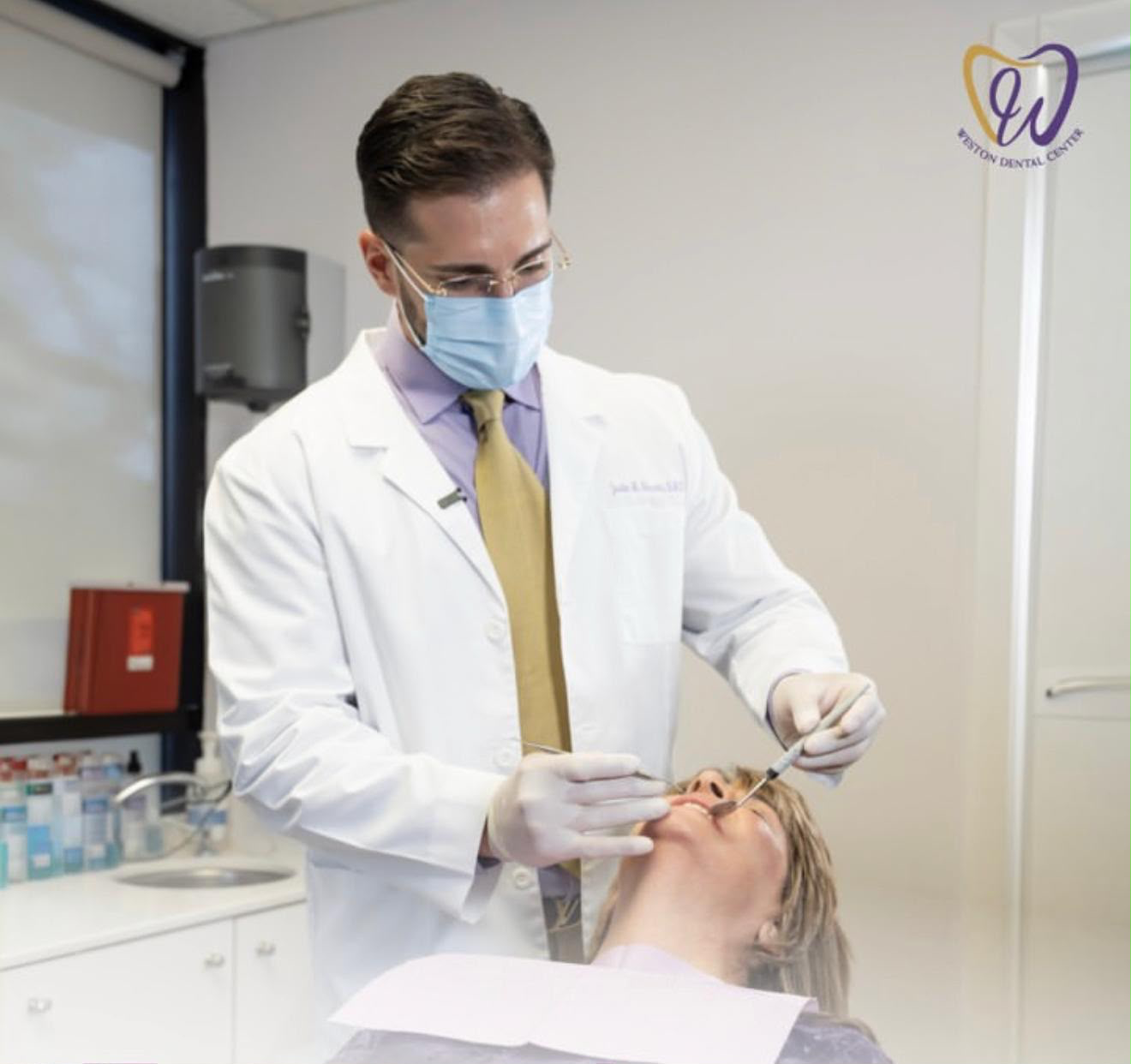
Weston Dental Center provides TMJ evaluations and treatment in Weston, FL for patients experiencing jaw pain, clicking, stiffness, or related symptoms.
What Happens During a TMJ Evaluation?
The dentist will ask when the symptoms started, where the discomfort occurs, what makes it better or worse, and whether you clench or grind your teeth. The examination may include checking the head, neck, face, jaw joints, and chewing muscles for tenderness.
The dentist may also listen and feel for clicking or popping, observe how smoothly the jaw moves, measure how far it opens, and evaluate the teeth and bite. Dental X-rays or other imaging are not necessary for every patient, but they may be recommended when the history and examination suggest that more information is needed.
What Can You Do While Waiting for an Evaluation?
Many jaw muscle and joint symptoms improve with simple, reversible measures. Depending on your health and symptoms, a dentist or physician may suggest:
- Choosing softer foods temporarily and cutting food into smaller pieces
- Avoiding gum, nail biting, and very chewy foods
- Using heat or cold as professionally directed
- Keeping the teeth slightly apart when you are not eating
- Becoming aware of daytime clenching and relaxing the jaw muscles
- Using over-the-counter pain medication only when it is safe for you and according to the label or a healthcare professional’s instructions
Avoid forcing the jaw through painful movement or trying to permanently change your bite on your own. National guidance recommends starting with conservative, reversible care because many TMD symptoms improve without invasive treatment.
Can a Night Guard Help?
A night guard may be recommended when clenching or grinding is contributing to tooth wear or muscle strain. It is not the correct solution for every type of jaw pain, and it should not be designed to permanently alter the bite. A custom appliance should be selected after an examination and monitored for comfort.
Learn more about custom mouth guards in Weston and how they may help protect teeth affected by grinding or clenching.
Frequently Asked Questions
Is jaw clicking without pain dangerous?
Usually, a painless click without restricted movement is not considered a problem that needs treatment. Mention it during your regular dental examination, especially if the sound is new or changing.
Can TMD cause headaches?
TMD can be associated with headaches, particularly when the chewing muscles are tense or painful. Headaches have many possible causes, so recurring or severe symptoms should be discussed with an appropriate healthcare professional.
Can stress make jaw symptoms worse?
Stress does not explain every TMD, but some people clench their jaw or tense facial muscles during stressful periods. Recognizing those habits and practicing relaxation may reduce unnecessary strain.
Will a clicking jaw eventually lock?
A click alone does not mean the jaw will progress to locking or serious damage. If you already experience catching, limited opening, or episodes of locking, arrange an evaluation.
Should I stop chewing gum?
If your jaw is painful or tired, temporarily avoiding gum can reduce repetitive loading of the joint and muscles. Your dentist can advise when normal chewing habits may be resumed.
Have Your Jaw Symptoms Evaluated in Weston
Jaw sounds are common, but pain, stiffness, locking, and changes in movement deserve individual attention. A dental examination can help distinguish a harmless click from symptoms that may benefit from conservative care.
Book an appointment with Weston Dental Center if jaw discomfort or limited movement is affecting your daily routine. Regular dental exams and cleanings also provide an opportunity to discuss new jaw symptoms before they become more disruptive.
This article is for general educational purposes and is not a substitute for an individual dental or medical examination, diagnosis, or treatment recommendation.
Sources
- National Institute of Dental and Craniofacial Research: Temporomandibular Disorders
- American Dental Association: Temporomandibular Joints
Author’s Bio

Dr. Justin Hosseini
Dr. Justin Hosseini provides custom mouth guards at Weston Dental Center to help protect teeth from grinding, clenching, and sports-related injury. Guards are designed for proper fit and comfort. Preventive use supports long-term dental protection.