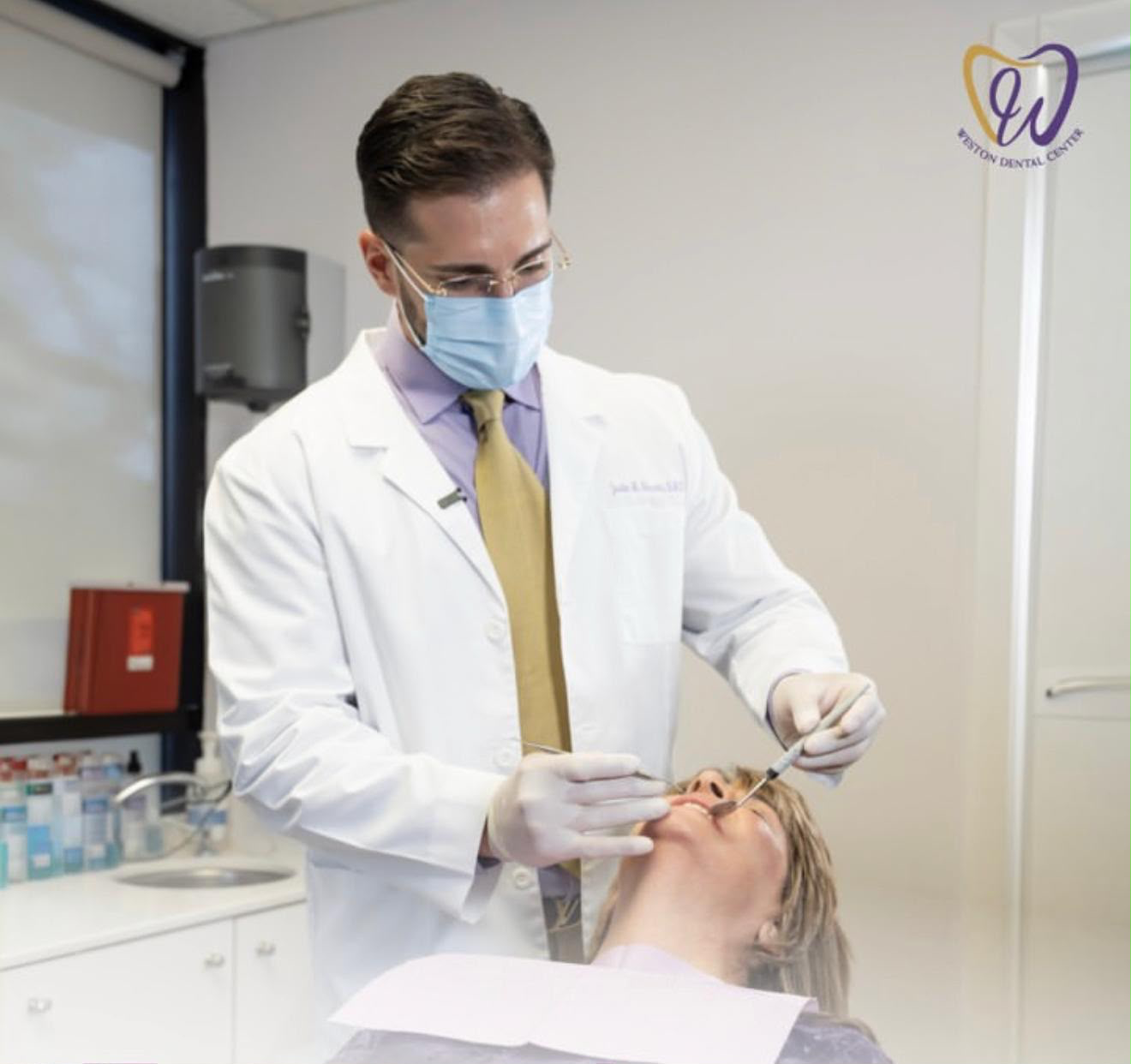

Dental sealants are a preventive option for teens and selected adults. They are often considered when permanent molars have deep grooves that make the chewing surfaces difficult to clean and the teeth do not already have decay or restorations that prevent placement.
The decision is made tooth by tooth. A dentist evaluates cavity risk, groove anatomy, existing fillings, enamel condition, and home care before recommending dental sealants in Weston.
What Is a Dental Sealant?
A sealant is a thin protective coating placed over the pits and fissures of a tooth’s chewing surface. These narrow grooves can trap plaque and food even when someone brushes carefully. The sealant flows into the grooves and forms a barrier that makes the surface easier to keep clean.
Sealants are usually placed on molars and sometimes premolars. They do not cover every tooth surface, and they do not replace fluoride, brushing, flossing, a balanced diet, or regular dental examinations.
When Do Teens Commonly Receive Sealants?
At Weston Dental Center, sealants may be recommended for patients ages 12 and older once permanent molars have erupted. Second permanent molars often appear around age twelve, and sealing deep grooves can help protect vulnerable surfaces while teens develop consistent brushing habits. Younger children should be evaluated by a pediatric dentist.
The Centers for Disease Control and Prevention reports that sealants can prevent up to 80% of cavities in the protected molars for the first two years and continue providing meaningful protection for several years. The exact benefit for an individual patient depends on cavity risk and whether the sealant remains intact.
Can Adults Get Dental Sealants?
Yes. Age alone does not determine eligibility. An adult may be considered when a molar or premolar has deep, cavity-prone grooves and the surface is free of decay or a restoration that would interfere with placement.
Adults with a history of frequent cavities, reduced saliva, difficulty cleaning certain teeth, or particularly deep pits may benefit from a risk-based discussion. However, a sealant cannot repair a large cavity or replace a filling. The dentist must first determine whether the tooth is healthy enough for preventive sealing.
What Happens During the Procedure?
Sealant placement is conservative and normally does not require drilling or anesthetic. The general process includes:
- Cleaning and examining the chewing surface.
- Keeping the tooth dry and isolated.
- Preparing the enamel so the material can bond.
- Applying the liquid sealant into the grooves.
- Hardening the material, often with a curing light.
- Checking the bite and coverage.
The appointment is usually comfortable, and patients can generally return to normal activities immediately afterward.
How Long Do Sealants Last?
Sealants can protect teeth for several years, but they are exposed to daily chewing and may gradually wear. During regular dental exams and cleanings, the dentist checks for thinning, chips, or areas that no longer cover the groove completely.
A worn sealant can often be repaired or replaced. Continued monitoring is important because a partially lost sealant may leave a groove exposed again.
Who May Not Be a Candidate?
A sealant may not be appropriate on a tooth that already has a cavity requiring restorative treatment, a large filling on the chewing surface, or anatomy that does not retain the material. Moisture control is also essential during placement. The dentist will explain whether monitoring, fluoride, a filling, or another preventive approach is more appropriate.
Frequently Asked Questions
Do sealants hurt?
No. The material is applied to the outside of the tooth, and routine placement generally does not require drilling or numbing.
Can a sealant be placed over a cavity?
The dentist must first determine whether decay is present and how far it extends. A tooth that requires a filling should not simply be covered without appropriate treatment.
Do adults benefit as much as teens?
The potential benefit depends more on the individual tooth and cavity risk than on age alone. Teens are common candidates because newly erupted molars are vulnerable, but selected adults may also benefit.
Can you see dental sealants when someone smiles?
Sealants are placed mainly in the chewing grooves of back teeth and are generally not noticeable in a normal smile.
Will insurance cover sealants for adults?
Coverage varies. Some plans limit sealant benefits by age or tooth, so patients should review their policy while making the clinical decision with their dentist.
Ask About Preventive Sealants in Weston
If you want to know whether sealants could protect your teen’s permanent molars or an adult tooth with deep grooves, schedule an evaluation at Weston Dental Center. We will assess each tooth and recommend protection based on its condition and your cavity risk.
Sources: Centers for Disease Control and Prevention: About Dental Sealants; American Dental Association: Sealants.
Author’s Bio

Dr. Justin Hosseini
Dr. Justin Hosseini provides dental sealants at Weston Dental Center to help protect molars from decay. Sealants are applied as a preventive option for patients who may benefit from additional protection. Preventive planning is discussed clearly to support long-term oral health.