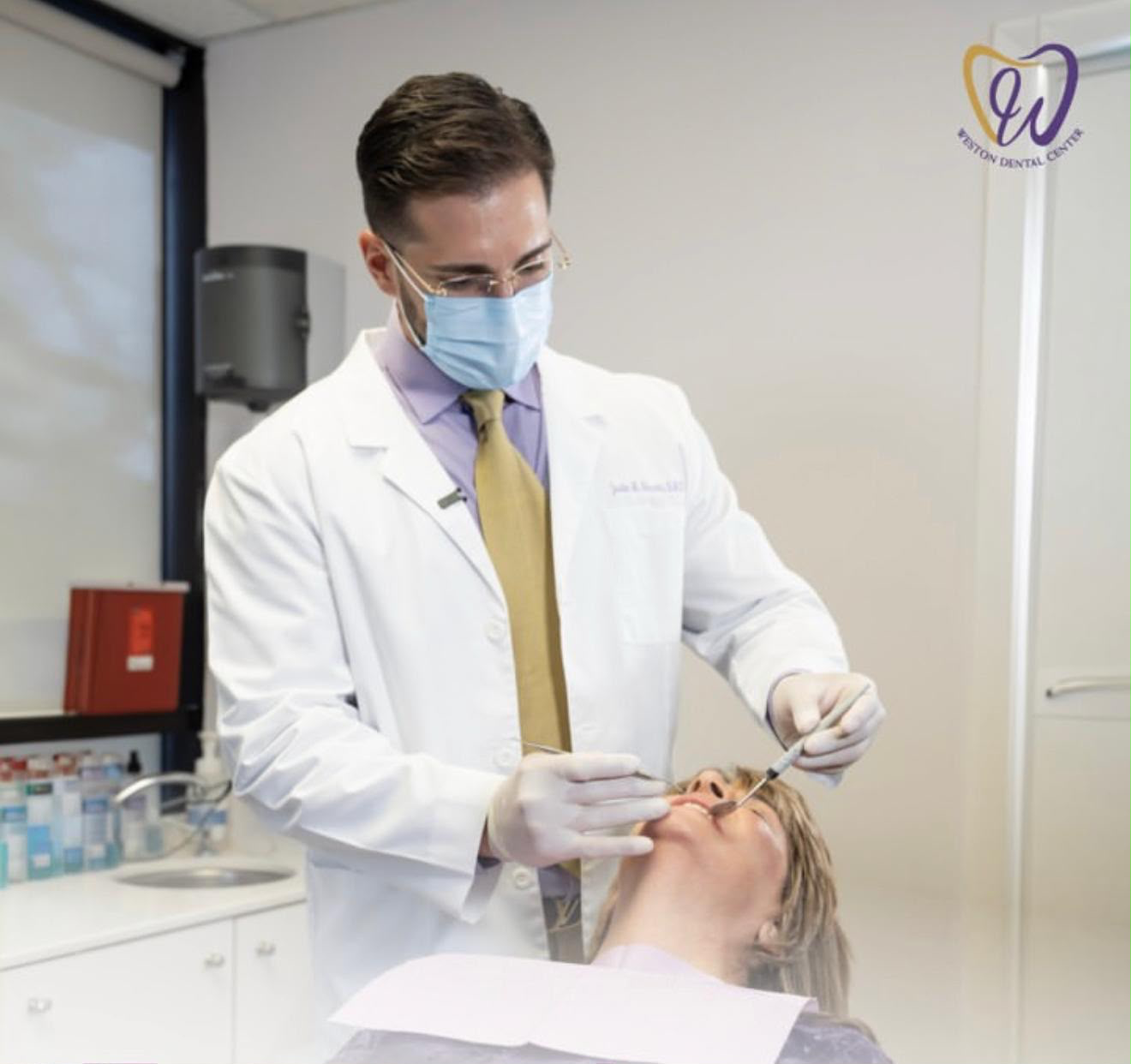

A night guard and a sports mouthguard are both worn over the teeth, but they are designed for different hazards. A night guard helps separate and protect teeth from grinding or clenching during sleep. A sports mouthguard is designed to absorb and distribute impact during athletic activity. Because their shape, thickness, retention, and performance requirements differ, they should not be used interchangeably.
The right appliance depends on when the risk occurs and what needs protection. A dental evaluation at Weston Dental Center can identify wear, assess your bite, and help determine which design fits your needs.
What Is a Night Guard?
A night guard—also called an occlusal guard or bruxism appliance—is worn during sleep when a person grinds or clenches their teeth. It creates a protective separation between the upper and lower teeth. The National Institute of Dental and Craniofacial Research explains that intraoral appliances can help prevent tooth damage and may reduce muscle activity associated with grinding and clenching.
Signs that may lead to an evaluation for a night guard include flattened or chipped teeth, cracks in enamel or restorations, morning jaw fatigue, tooth sensitivity, or reports of grinding sounds during sleep. These symptoms can have other causes, so a dentist should examine the teeth and jaw before recommending an appliance.
What Is a Sports Mouthguard?
A sports mouthguard is protective equipment for activities in which a blow, fall, ball, stick, elbow, or collision could injure the teeth and oral tissues. The American Dental Association recommends a properly fitted mouthguard for sports and recreational activities with meaningful risk of dental or facial injury.
A sports guard is usually thicker and extends over vulnerable tooth surfaces to cushion impact. Proper retention is important: the athlete should be able to breathe, communicate, and keep the guard in place without constantly biting down.
Why Are They Not Interchangeable?
Each appliance is engineered for a different type of force:
- Night guard: manages repetitive tooth-to-tooth contact and wear during sleep.
- Sports mouthguard: helps absorb sudden impact and reduce sports-related oral injuries.
A slim night guard may not provide sufficient coverage or energy absorption during a collision. A bulky sports mouthguard is not intended to manage nightly grinding and may be uncomfortable or inappropriate for sleep. Using the wrong appliance can also create false confidence about protection.
Custom, Boil-and-Bite, or Stock?
Sports mouthguards generally fall into three categories. Stock guards are ready-made but offer limited adaptability. Boil-and-bite guards soften in hot water and are shaped at home. Custom guards are made from a dental impression or digital scan and can be designed around the patient’s teeth, orthodontic appliances, sport, and level of contact.
The ADA notes that custom-made guards can offer strong fit and comfort, although a properly prepared over-the-counter product may also be useful when it meets recognized safety standards and is worn consistently.
Night guards are also available over the counter, but a custom appliance allows the dentist to control fit, contact, and material more precisely. A poorly fitting appliance may fall out, interfere with sleep, or create unwanted pressure.
What if You Have Braces or Dental Work?
Patients with braces may need a sports guard that accommodates brackets and expected tooth movement. Crowns, bridges, implants, veneers, and missing teeth can also affect appliance design. Bring your guard to dental appointments so its fit and condition can be checked.
Growing teens may outgrow sports mouthguards as teeth erupt and their jaws develop. Replace an appliance when it becomes loose, damaged, distorted, or too small.
How Should You Care for a Mouthguard?
- Rinse it after each use and clean it according to your dentist’s instructions.
- Allow it to dry and store it in a ventilated protective case.
- Keep it away from direct heat, hot cars, and pets.
- Inspect it regularly for tears, rough edges, thinning, or distortion.
- Do not share a mouthguard with another person.
Frequently Asked Questions
Can I wear my night guard while playing sports?
No. A night guard is not designed to absorb athletic impact. Use a properly fitted sports mouthguard for practices and games.
Can a sports mouthguard stop teeth grinding?
It is not designed as a bruxism appliance. If you grind or clench, a dentist should evaluate the cause, tooth wear, jaw symptoms, and appropriate nighttime protection.
Does a night guard cure bruxism?
A guard primarily protects the teeth. It may not eliminate the underlying grinding or clenching, which can relate to several behavioral, sleep, medication, or health factors.
Which sports require a mouthguard?
Rules vary, but dental injuries can occur in contact, collision, limited-contact, and high-velocity activities. The ADA lists sports ranging from football and martial arts to basketball, skating, gymnastics, and cycling.
When should I replace my guard?
Replace it when the fit changes, it develops tears or sharp areas, it becomes noticeably thinner, or your dentist finds that it no longer provides appropriate coverage.
Choose the Right Protection in Weston, FL
If you wake with jaw fatigue, see signs of tooth wear, or need protection for sports, book an appointment with Weston Dental Center. We can help distinguish between a night guard, sports mouthguard, and any related care your teeth or jaw may need.
Sources: National Institute of Dental and Craniofacial Research: Bruxism; American Dental Association: Athletic Mouth Protectors.
Author’s Bio

Dr. Justin Hosseini
Dr. Justin Hosseini provides orthodontic care at Weston Dental Center to improve alignment and bite function. Treatment planning is customized based on individual needs. Orthodontic care supports both oral health and everyday function.